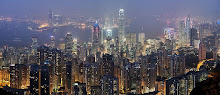
I just returned (read: left early) from the Happy Valley Racecourse, which in my humble opinion, requires a change of name. My classmates and I had really been looking forward to Happy Valley – a horse race track right in the middle of Hong Kong, where for $1.50 USD you could go hang out in the beer garden, watch some races, and mingle with some ex-pats after a day at the office…like a playground for adults. What it was instead was a circus of frat boys slamming beers, decrepit men shrouded in thick clouds of cigarette smoke, and us…in 93 degree heat with 100-percent humidity. The novelty of horses wore off quickly and the thought of drinking foamy beer in that kind of thick, sticky heat began to seem like the worst idea of all time. We struck out in search of food since we were all starting to get cranky from the heat and from hunger. We opted for the Happy Valley Grill rather than McDonald’s (the only other food available) and I suffered through a partially-cooked chicken kebob in some sort of red sauce. (Michigan girls: It was a Playa-Suites-mealtime-bad kind of situation)
After ingesting what I’m sure will rapidly turn into salmonella poisoning, Melinda and I fled from Happy Valley (read: Sad Valley) back to the “comfort” of the Ibis Hotel. Now, as I am perched at the edge of my bed (therefore knees jutting into the bathroom), ready at a moment’s notice to drop my laptop and toss my cookies, I figure what better time to blog about food here in Hong Kong.
Eating great food, for me, is like falling in love. And my love affair with Asian cuisine (Japanese, Thai, Vietnamese, Korean, Chinese, Indian, Indonesian, Burmese…) was one of my reasons for coming to Hong Kong in the first place. Hong Kong is a food-lover’s paradise…any cuisine you could dream of, the freshest ingredients, expertly and lovingly prepared by masters of the kitchen, from Michelin-star restaurants to family-run cafes, to hole-in-the-wall joints and Dai Pai Dongs (street stalls). Food is so important to the people of Hong Kong, too; it is more than mere sustenance, here it is a reason and a purpose for being – and that’s a life philosophy I can get on board with.
There are food markets everywhere - lined up along major streets, tucked away in back alleys and side streets, and set up in the middle of roads once the sun goes down. Walking through the city is an overwhelming olfactory experience – the air is fragrant with scents and flavors of sweet, spicy, savory, smoky, pungent and pleasant, fishy and earthy, all assaulting you in a beautiful dance for which salivation is the appropriate manner of applause. Many market stalls sell packaged goods and heaping bins of unidentifiable items (to us westerners) as well as fresh fruits and vegetables – most of which I have never seen and don’t have the faintest idea of how to eat. It is often hard to try new things at the markets because of the language barrier, and vendors can get easily frustrated if you don’t have cash in hand or take too long to decide what you want. However, I have tried some dried seafood and amazing exotic fruits: dragonfruit looks prettier than it tastes, mangosteen and rambutan are delicious and lychees might be my favorite. I am staying away from durian – the fruit that everyone describes as smelling and tasting like a sweaty gym sock.
The majority of stalls at the markets are meat and fish stalls. My dad, experienced from his worldly travels, prepared me for this sight as best he could. Outdoor markets, no refrigeration, and hundreds of hanging slabs of raw meat, animal heads and feet (nothing goes to waste), plates of raw fish and seafood, tanks of live fish and seafood, cages of live chickens and other foul. (These would be those pungent, earthy, fishy smells I was speaking of above) While at first a little shocking, I have now gotten used to this normal scene and way of everyday life in Hong Kong...although there was one unfortunate day when I stepped in a puddle of stinky-fish-water.
I also have to say it’s pretty awesome to see the locals go to the market, tell the vendor what they want, and watch the vendor expertly and zealously butcher the meat curbside. For those of you still gagging over the thought, I’ll leave you with this: buying raw or live proteins at the market like this is not only safe, but it’s also a more desirable way to eat than as we do at home. The products at the market were butchered that morning, for that market day. Whereas in America, we go to the grocery store where our food has been chocked full of hormones and preservatives, frozen and thawed, and sitting in its packaging for who knows how long, originating from who knows where to eventually end up in Ralphs aisle five. Not saying I’m going to start raising and butchering my own meat, but a girl can dream, can’t she?
I pride myself on not only having a sophisticated palate (yes, I am such an arrogant foodie that I will say “sophisticated palate”) but on being an adventurous eater. I will happily try anything once – and this attitude works much to my advantage and delight in such a foreign world. Already I have eaten pigeon and small intestine (I don’t know of what animal) and although these weren’t intentional selections from the menu, they were very tasty and I did not regret learning their true identities. I’m hoping to soon eat congee, live octopus, and chicken feet.
My parents deserve a lot of credit for my gastronomic prowess. As far back as I can recall, they would help my sister and I explore new foods and exotic tastes. Karen and I always asked for sushi over McDonald’s, Dad took us out for Pho and taught us how to use chopsticks, while Mom handmade shui mai on special occasions and still makes the best Vietnamese summer rolls and peanut sauce I’ve ever tasted. (We’ll see in a few short weeks if Vietnam can beat you on this, Mom) So I owe them a world of thanks for opening up a world of delicious possibilities and because without their guidance, I would be the dopey American requesting a fork at every meal, not recognizing anything on a menu, awkwardly pushing around the food on my plate, and clinging to the French and Italian restaurants in the ex-pat neighborhoods. I love that I’m not that girl. Instead, I get to surprise my work friends with my familiarity of many Asian cuisines, my ability to order more or less on my own (translating is sometimes necessary), my urge to try everything they suggest, and my chopstick skills. Although, I have made a few American “flubs” such as eating cold leftover Chinese food (“an abomination!”), eating raw vegetables (“disgusting!”) and using napkins (“ohhhh so funny!”). A side note on napkins: there are no napkins to be found anywhere in restaurants here. Apparently Asian people don’t make messes of themselves, while Americans are slobs. Guess I can’t totally outrun my American blood.
One thing I was not prepared for is the Chinese bakery phenomenon. Much like American cities have a Starbucks on every corner, Hong Kong has a bakery on every corner, sometimes five on one street. I did not know that the Chinese were so into cakes, breads, buns, and desserts – but bakeries are a mainstay of Chinese culture and are extraordinarily popular. What is unique about Chinese bakeries is the emphasis of savory over sweet. While all bakeries have tempting selections of cakes and pastries and buns in exotic flavors and all beautifully decorated, the majority of offerings are savory baked goods – and the best way to describe them is to imagine a drunk college kid, in a kitchen at 3am, making a snack.
Picture a sweet English muffin, topped with pizza sauce, cheese, and chopped up hot dogs. Maybe you’d prefer the Danish topped with corn and cheese. Or perhaps the braided-twist bread with an absurdly long hotdog secured inside. There is some strange fascination with hot dogs here, and they are chopped up and put in dishes that I would never put a hot dog in: oatmeal, soup, with macaroni and peas, and alas, the pastry. If I were allowed to take photos in the bakeries, this would be my most entertaining album.
The less strange savory options (maybe they’re strange to you, but not to me anymore) are buns stuffed with barbequed pork, rolls stuffed with chicken and mushrooms, buns with pork floss and cheese, buns stuffed with tuna fish…like the Asian version of a sandwich. The sweet baked goods are awesome – coconut rolls and mango cakes and tiramisu and sesame buns and chocolate éclairs and egg tarts and green tea and red bean puffs. As if I didn’t love having a bakery on every block, with the exchange rate in Hong Kong, the average item is under $1 USD – and we’re talking hand-crafted artisan baked goods! The oddity of it all…no obese people in HK. Go figure.
Speaking of non-obesity, the desserts here overall are strange, exciting to sample, often sickeningly sweet, and look like an art project from 4th grade. Coconut milk with sparkly jellies, fruits and teeny glutinous rice pearls. Green tea ice cream with coconut milk and red beans. Mango pudding with heart-shaped fruit pearls and condensed milk. Cinnamon soup with sticky rice dumplings. Sweet bean curd with almonds and aloe vera.
My favorite dessert to buy in the Paddington Bear Wellcome Market? Easy. That would be the unfortunately named Creamy Collon (which my classmates and I oh-so-maturely pronounce as if there was only one “L”) and the Hard Stick, which complements the Creamy Collon nicely. I can’t help but imagine what seemingly normal items foreigners laugh at in our American grocery stores, although I cannot recall seeing any Chewy Anal or Stiff Rod last time I was at Ralphs. Maybe Hamburger Helper gets them…that oven mitt is pretty silly.
So go to your local Chinatown and take a day to explore with your stomach – you won’t regret it. Much like I don’t regret stocking my medicine cabinet full of antibiotics and Pepto, thanks to you Happy Valley Racecourse.
Wednesday, June 10, 2009

Monday, June 8, 2009
June 7: Cloud Hopping, Big Buddha, Tacky Tourism and Crispy Duck...An Average Sunday
On Sunday CJ, Kevin, Dominic, Melinda and I went to Lantau Island to see the giant Tian Tan Buddha, the Po Lin Monastery and the Ngong Ping village – one of the most highly-rated cultural attractions in Hong Kong. (Thanks, HKTB)
Lantau Island is just a 45 minute MTR ride from Hong Kong, and when we arrived on the island we met up with Melinda’s friend John who was in Hong Kong for work. The only way to get to Ngong Ping from the MTR station is by a 25 minutes aerial cable car ride across the island, which was absolutely amazing – perhaps the best part of the trip. We followed the rolling ridges of the green mountains and soared high above the China Sea and inlet bays. As we neared Ngong Ping, we saw the Buddha emerge through the mist high up on a mountain top. Its presence was compelling, almost magical.
Lantau Island is just a 45 minute MTR ride from Hong Kong, and when we arrived on the island we met up with Melinda’s friend John who was in Hong Kong for work. The only way to get to Ngong Ping from the MTR station is by a 25 minutes aerial cable car ride across the island, which was absolutely amazing – perhaps the best part of the trip. We followed the rolling ridges of the green mountains and soared high above the China Sea and inlet bays. As we neared Ngong Ping, we saw the Buddha emerge through the mist high up on a mountain top. Its presence was compelling, almost magical.


We landed in Ngong Ping Village – a wonderfully tacky setup obviously built for the sole purpose of tourism. In the “village” we ate bland Chinese dishes reminiscent of Westfield Montgomery food court fare and took advantage of the ample photo opportunities to stick-your-head-in-the-cardboard-cut-out. There was a Starbucks and five different gift shops which all presented the chance to buy any manner of branded junk as well as purchase the candid group photo taken as our cable car arrived in Ngong Ping (did we want that in a key chain or a commemorative photo frame?) However, for us, authenticity isn’t always a requirement…throw enough varnish and kitsch together and we’re happy either way.

From Ngong Ping we made our pilgrimage to the Tian Tan Buddha – the world’s tallest (112 feet) Buddha seated on a lotus throne atop Ngong Ping plateau. The giant Buddha is made of bronze and took over 10 years to create, unveiled in 1993 amid religious ceremonies and dedications. We climbed more than 250 steps to get to the Buddha and took approximately 100 photos on our way up. Upon reaching the Buddha, we took in the amazing view, high above the rest of the world, at eye-level with the mountaintops – it was so stunning and serene and peaceful. And if you’ve got my imagination/taste in entertainment, the scene (lush green mountains, deep bays, heavy mist) was reminiscent of Jurassic Park and LOST. I kept waiting to find Jacob in the belly of the Buddha, or see a T-Rex roar out of the tree line…maybe you had to be there?


After sharing a spiritual moment or two with the big guy, we visited the ornate gardens and shrines of the Po Lin Monastery at the base of the Buddha. Exhausted at the end of another long but unforgettable day, we got back in the cable car for the return trip, and it was just as exhilarating as the second time around…the MTR ride, however, lulled us all to sleep.

We met Mike for dinner at “American Restaurant” for the best crispy Beijing duck in Hong Kong…odd name choice, we know. It was great food (although we may have accidentally eaten a side dish of pigeon – and enjoyed it!) and great company and we surprised Mike with a birthday cake! The perfect end to another perfect day in Hong Kong…and at this point, I’ve come to expect nothing less.

Sunday, June 7, 2009
Photos from Nan Lian Garden, Chi Lin Nunnery, Wong Tai Sin


Subscribe to:
Posts (Atom)